Sunday, January 10, 2016

Maintaining a Minimalist Wardrobe


They say the first place to begin your quest living with less is your closet. One of the reasons is that they tend to have an abundance of unwanted and overly worn items that will be easy to part with. In today's consumerist society where you can buy clothes cheap, it's easy for things to get out of hand and pile up quickly.

It's also the reason why newer homes are being built with walk-in closets to house all of these items. If you've ever visited Paris, you will find armoires in place of closets. These standing wooden closets can only hold up to around 20 hangers. But you don't see Parisians complaining.

You may think that having more options will make it easier to get dressed in the morning, but the opposite is actually true. Have you ever gone to a restaurant that has a everything you can imagine on their menu only to find you spend forever flipping through the pages trying to decide on something? Too many clothes give you too many options and you spend more time weeding through piles to find things. Do you really need 5 gray t-shirts? Will you ever wear the shoes you bought to go with your bridesmaids dress? Maybe there's a reason there's still a tag on that shirt that hasn't been worn since you bought it 5 years ago.

Less is More
One of the benefits to having less clothing in your closet is being able to spend less time searching for what to wear. It also gives you more space to properly care and store your clothes so they are able to breathe and more likely to last longer. An organized closet will keep clothes off the floor and on hangers or in drawers where they belong.

Another benefit to having less clothing is being able to spend less on new clothing. A general rule to keeping your closet to the bare essentials once you've decluttered it is to make a promise to yourself that any item you purchase and bring into your space will mean you have to give up one item in it's place. This will force you to really think about how much you want or need an item before you make that choice. This can save you money in the end and keep you out of department stores that tempt you with sales.

Love It or Leave It
The best way to decide if an item stays or goes is to decide if it's worthy enough to share a space with you. Create three piles before you begin. One pile for things to "keep", one pile for things to "donate" and one pile for "trash". Some questions to ask yourself when considering which pile to put an item in are: How often do I wear this? Is it damaged? Does it still fit? Is it flattering? Can it be worn with anything else?

Love and Logic
Are you a Mom who gets spit-up on your clothes daily? Are you an art teacher painting with kids? Do you have pets that get fur on your black clothes? Then maybe you need to think about these things when you are sorting your wardrobe. Be sensible realistic about whether or not you need a formal gown if you never go to fancy parties, or if you need so many wool sweaters if you live in a warm climate.

Keep it Simple
A minimalist wardrobe does not need to be all neutral colors in order to be paired with other items to create new outfits. You will however need to have a few items that will complete an outfit like black flats and a white t-shirt. Patterned items will be harder to pair with other items, but it can be done. I will talk more about this in a future post.

Quality Over Quantity
We all know that we get what we pay for. If you pay $5 for a shirt, it probably isn't going to last. But not everyone can afford to buy the organic cotton version. Keep in mind there are other options than stores who sell cheap clothing made overseas. Thrift-stores can provide you with brand name items for the same price, and also keep clothing out of the landfill.

Handle with Care
If you want your wardrobe to last, you need to treat your items with respect. This can be done simply by purchasing nice wooden hangers instead of using the wire ones you get from dry cleaners. Or by folding or rolling your clothing that is stored in drawers instead of bunching it up and cramming the drawer shut. If clothes are pressed against each other on hangers then you need to remove more things to allow space.

Previous posts on downsizing and living simply:
A purposeful pantry
Living life without plastic
A journey to simplicity

Tuesday, December 29, 2015

Purposeful Pantry


I recently posted about our decision to go plastic-free in our home as part of our journey to simplicity. I wanted to revisit this topic because while going plastic-free can lead to less chemicals in your body, it can also cause you to eat healthier overall.

Going Glass
I emphasized using glass or stainless steel containers to store food in my previous post. There are an assortment of glass storage containers on the market, some of which have plastic lids. While I don't condone using containers that contain plastic, using these containers are generally safe as long as the food is not touching the plastic. My favorite containers to use are glass cracker jars that have a screw-on metal lid and rubber gasket glass canning jars. If you are like me and prefer labeling, you can purchase chalkboard stickers to put on the jars and a liquid chalk pen to write with.

Other Options
Baskets are a wonderful option for storage in the pantry or refrigerator. You can store fruit and veggies in them or keep spices (in glass containers) organized. Baskets with handles make it easier to get in and out of the cabinet and onto the counter. Wire baskets like this one are another great storage solution.

Bread boxes are great for families with pets. Wooden or metal boxes that have a lid closure can keep bread from going stale and safe from pets.

Other helpful plastic-free additions to the pantry and refrigerator are ceramic egg crates, glass butter dishes and hanging wire baskets to hold fruit and vegetables in that should not be refrigerated.

Container Contents
One of the benefits to having a storage container for the items you need is that when you run out of that item you have an empty container. This can serve as a reminder of what you need to restock in your pantry on your next market run. By having dry ingredients on hand, you have them readily available to make a quick soup or stew when short on time. This can promote healthier eating and less chance that you will fill up your pantry with processed food. Here is a list of dry items to keep in your pantry:

- Baking soda
- Baking powder
- Flour
- Sugar
- Dry beans (kidney, navy, etc.)
- Popcorn
- Brown sugar
- Rice (white, brown, wild, etc.)
- Seeds (chia, sunflower, etc.)
- Nuts (walnuts, almonds, etc.)
- Cornmeal
- Dry pasta (macaroni, spaghetti, etc.)
- Breadcrumbs
- Oats (oatmeal, etc.)

Canned Concerns
While canned foods have been a staple in pantries for decades, it has come out recently that today's canned foods are not packaged the same way they were 20 years ago. The BPA linings that keep the cans from rusting are dangerous to your health and deemed unsafe for consumption. While you might be feeling good about the fact that you've been purchasing canned goods that are labeled "BPA Free", there is new evidence to suggest that companies are replacing the linings with alternative plastics that have similar effects as BPA and that have not been tested for safety. As of today, the only canned good company that is safe is Eden Organics because they use the classic method of canning that does not require a BPA can lining. Even so, the worst culprits are acidic canned foods like tomatoes because they retain the most chemicals from the lining. I try to stay clear of any canned goods if possible, and instead use dry ingredients when I can. It may mean soaking dry beans overnight or chopping my own vegetables, but our health is worth the time spent doing these extra steps.

Getting Groceries
Not everyone has a farmers market readily available and most are only around during the spring and summer months. While a farmers market is your best option for purchasing breads and produce without plastic packaging, there are options for getting groceries from store to pantry without ever touching plastic.

1. Bring a bag: This seems obvious, but sometimes you forget. One way to prevent this is to keep bags in your car for those unexpected grocery store runs. Having a reusable cloth bag is also a way to keep plastic grocery bags out of landfills. Be careful when you purchase a reusable bag, some bags are made from recycled plastics or artificial and synthetic material which can also be toxic.

Bringing your own bag does not mean just to carry groceries out. There are also vegetable bags that have a cinch tie for closure to keep from needing those flimsy plastic fruit and vegetable bags. These bags can also store dry beans and rice.

2. Choose items that have cardboard or glass packaging: There was a time when ketchup did not come in a plastic squeeze bottle. It is possible to get ketchup out of a glass bottle with a little patience, and these glass bottles are still available as an option in grocery stores. There are many soda options in glass bottles and pastas can be purchased in cardboard boxes instead of plastic bags. The best part about buying items in glass containers is once you use up all of the items in those glass containers you can clean and use them as storage containers in your pantry.

3. Bake your own bread: Bakery bread is fresher, has less preservatives and is not stored in plastic. But an even better option is to make it at home. There's not many things better than the smell of fresh baked bread, and baking bread does not need to be the labor of love it used to be. You can now purchase a countertop bread oven and there are plenty of recipes for a no-knead and self-rising bread.

Thursday, November 26, 2015

Holiday Gift Guide


In a minimalist lifestyle, you question every purchase and try to only buy things that serve multiple purposes. If it is going to take up room in your life, it needs to do more than just collect dust.

During the holidays, you want to encourage the same values by giving a gift you know can be useful, but not something as mundane as a pair of socks or gloves. You also want to give gifts that would be something you yourself would love to have. And as amazing as handmade gifts are, not everyone has the time or creative endeavors to create such gifts.

Here are some of my favorite ideas for the gift giver that wants to give purposeful gifts, all under $30.

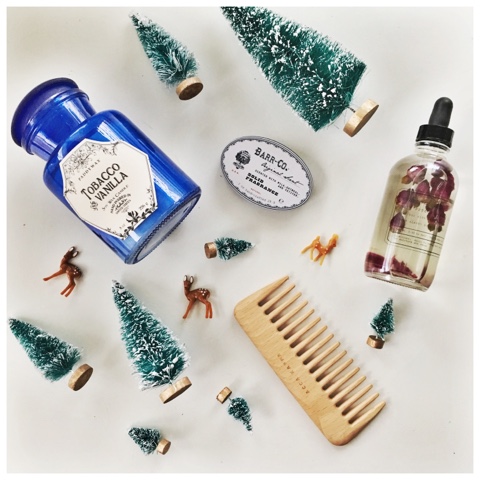
1. Paddywax Tobacco Vanilla Candle $24 from Urban Outfitters

I have never met a scented candle from Paddywax Candles I didn't like. But of the many assorted varieties I have had the pleasure of buying, the Tobacco Vanilla from their French Apothecary Collection is my favorite. Hands down. Maybe it's the tobacco scent that reminds me of the pipes my father used to smoke, or the vanilla scent that reminds me of baking. Maybe it's the new blue glass bottles, or a combination of all three. Either way, there's just something about a flickering candle that brings warmth to any home.

2. Acca Cappa Beech Wood Comb $28 from Anthropologie

If you've read my previous posts, then you know I am passionate about living plastic-free. Which is why I get excited when I find a plastic-free alternative to a plastic item in my home. This comb is not only beautiful, but it's natural wood and is smooth enough that it does not snag your hair. It is beautifully crafted and can be a gift for men and women.

3. Rosebud Multi-purpose Oil $28 from Urban Outfitters

This oil has changed my life. Not only is it multi-use, meaning you can use it on skin or hair to moisturize, but it has the most feminine and beautiful scent (rose, peony and bergamot) that lingers longer than any spray perfume. It comes in a glass bottle, which makes this plastic-free gal giddy, and has beautiful dried petals that float in the oil. Because of how few drops you need and the size of the bottle, I can see it lasting for quite some time.

4. Barr-Co Solid Perfume $16 from K. Hall Designs

As mentioned in my last item, I have found that the scent of spray perfumes do not last. What has worked for me are oils and solid perfumes that absorb into the skin for a longer lasting scent. If you have not heard of Barr-Co, it is an eco-friendly company that does not use plastics and instead uses glass bottles and packaging that can be repurposed once the product runs out. In the case of this solid perfume, the tin container could be reused as a change or safety pin holder. This particular perfume is scented with milk, oatmeal, vanilla and vetiver. I find that the scent lingers on the skin longer than a spray but isn't greasy on skin.

Saturday, November 14, 2015

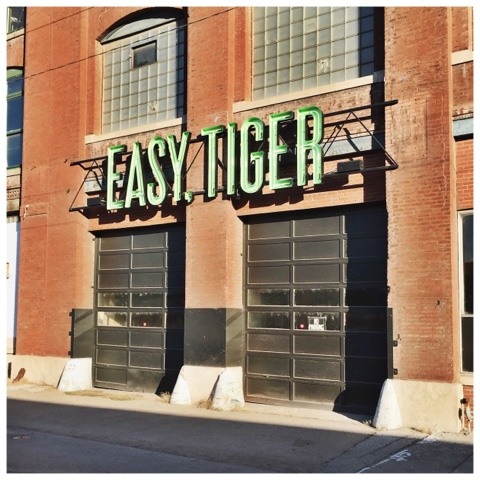
Easy, Tiger Co.


Maybe you've seen the vintage neon green van around town or the matching vintage greeting card machine at Quay Coffee. Maybe you've seen the stackable "Coffee Snob" coffee mugs at Thou Mayest or the "Best at Life" shirts at Westside Storey. Maybe you didn't realize that behind each of those products is a little start-up company out of Kansas City called Easy, Tiger.

My husband Mike Sayre is writer and co-founder and along with designer Melanie Bridges. As someone that has followed their journey and seen the space before renovations, I can tell you things have come a long way. I spent some time photographing the finished space and am so excited to finally share them with you.

The company's success at finely crafted sarcasm started out with greeting cards and eventually expanded to everything from trophies to beer glasses. This growth led to the need for a space that could work as a retail store, an office, a shipping dock and a garage that could house the company van. They found that space in a former wood shop at the bottom of the 12th street bridge in the West Bottoms district of Kansas City and opened for the first time last weekend after several months of renovations.

The space is furnished with vintage finds which is a theme for Easy, Tiger since the company started out with refurbishing vintage candy machines and a vintage Dodge van that become a delivery vehicle. The Easy, Tiger van and one of the greeting card machines are part of the new space along with their glassware, journals, prints, shirts and cork board maps available for purchase.

As far as hours of operation for the retail space, they plan to be open during the week and on First Friday weekends. Be on the lookout for the sidewalk open sign out front or follow them on Instagram @easytigerco for updates on hours.

For information on where to find Easy, Tiger merchandise or to order online, visit: https://cardsforawesomepeople.com/

Saturday, November 7, 2015

Autumn Memories


1. All the albinos
2. Autumn observations
3. A whiter shade of pale.
4. Watching the leaves change.
5. Tiger stripes
6. Arrow's pinecone garland 

Thursday, November 5, 2015

Belger Crane Yard Studios - A Photo Journey


I had the opportunity to attend a workshop at Belger Crane Yard Clay and Red Star Studios where I was able to photograph and document the beautiful space that many local Kansas City clay artists consider their second home.

This hidden gem sits at the end of a dead-end road next to an old crane yard. The upper level is the home of owners Dick and Evelyn Belger who renovated the building between 2010 and 2013. The multi-level industrial brick building seems unassuming until you enter the glass double doors found down a gravel alley. Just inside the main entrance is a 10,000 square foot gallery (featuring work by industrial designers, sculptors and illustrators) surrounded by windows with a view of downtown Kansas City.

As you exit the gallery, you find yourself inside the studio where artists rent space to work and take part in maintaining the studio. Walking down the isles you see rows of rented shelves that are lined with the artists work in different styles, stages and processes and rolling racks with greenware ready to fire. It's also likely you  will see artists in residence working in their booths deep in concentration.

Just outside the studio and accessible to the public is their retail store where you can purchase several types of clay, kilns, glazes, sponges and scrapers.

The studio does take donations for things like plastic liquid soap dispensers for glazes and Rubbermaid tubs to keep clay from drying out. If you are interested in donating items, be sure to like their Facebook page where they frequently post when in need of a particular item.

If you are interested in visiting the space, they are open for First Friday events and offer date night and student classes.

To see a schedule of events or for more information and directions, visit: http://redstarstudios.org

Wednesday, October 28, 2015

Living Life Without Plastic


One of the benefits of downsizing over the last year and removing clutter was that I began removing the many plastic food containers and cooking utensils we no longer needed. I also began replacing the ugly neon colored plastic spray bottles with amber glass ones and switched out our plastic trash can for a stainless steel one. I had not realized up until that point how much of the manmade material had made its way into our lives. I began to obsess about where else in our home this monster was lurking.

Not only is plastic not aesthetically pleasing, but it's also very toxic to our bodies. I knew about the dangers of bisphenol A (BPA) and phthalates but had never realized the extent of our consumption of this cheap and nondestructive material. When I began to research the history of plastics, I learned that just because a product says it is BPA free does not mean it is safe. I also learned that there are hidden plastics in the lining of our canned goods and sodas. It only makes sense that any project that was created in a chemistry lab cannot be safe to store the food and beauty products we put in and on our bodies. We are told not to leave water bottles in our cars because the heat will leach the toxins from the plastic into our water and yet we are comfortable with microwaving our food in plastic containers. There are studies that show plastic baby bottles that claim to be BPA free still contain toxic chemicals. While it may be impossible to remove the popular material completely, there are many ways we can at least minimize some of it from our home and lives.

1. Go Glass

Rethinking plastics in your pantry can have many benefits. Because many processed foods are sold in plastic bags and containers, you will want to start purchasing a healthier alternative in the form of fresh products or products sold in glass or paper instead. Milk even tastes better in a glass bottle as it keeps the milk colder and safer from toxins. Stock up on mason jars or other glass containers to store your food in that you can use safely in the oven or microwave. You can even purchase sticker chalkboard labels if you want to label everything. Toss any plastic storage containers and purchase the glass version like this one. Make sure all dishes and reusable water bottles are glass. This is one of my favorite water bottles because it is safe even if you drop it (which I have!) and I can use my essential oils in it without worrying they will eat away at any plastic. You can also use stainless steel water bottles like Kleen Canteen. Be sure to consider your pets water and food bowls as well. When purchasing packaged beverages, be sure to opt for glass as soda cans are lined with plastic. You may think wine is safe since it's in a glass bottle, but unless it has a cork closure it is not safe.

2. BPA-Free Baby

Have you ever thought about how many toys today are plastic? While they may be safer, you need to consider how many plastic toys are going into your baby's mouth. Wooden toys are a great alternative and can sometimes last longer. Plastic diapers are something else that people forget is plastic. There are many cloth diapers options as an alternative along with glass bottle options in place of plastic ones.

3. Skip Straws

Those plastic stoppers in our expensive to-go coffees may keep our beverage warmer longer but we know what happens when plastic gets heated up. The plastic straws and coffee stirrers at restaurants are also not necessary when you can simply stir your coffee or tea with a metal spoon or drink from the glass. Opting against these unnecessary items can not only keep plastics out of our body but they can also reduce waste. If you really like straws and stirrers, there are many great alternatives in paper, wood or bamboo form. Also consider using reusable travel mugs to get your coffee on-the-go. Most coffee shops endorse doing this as it saves them money on packaging. Just be sure it does not have a plastic lining.

4. Better Bags

Does anyone really like plastic bags? It seems you can only fit one or two things in them and need to double bag them in order to carry anything heavy. Trying to carry them inside leaves lines in your hand and they don't exactly look good stuck in a tree. If you forget your reusable bag at the grocery store or farmer's market, opt for a paper sack. The kraft paper can be used to wrap gifts and you need less of them to get groceries inside. When buying fruit or vegetables at the grocery store, skip the thin plastic bags to store them in, especially if you are only getting one or two. You can purchase small canvas bags to use instead. If you do not want to make your own bread, purchase fresh loaves from the bakery instead of the pre-packaged breads that are loaded with preservatives and packaged in plastic bags. Speaking of farmers markets, opt for a cardboard berry basket instead of a plastic one. Most vendors will gladly take them back on your next visit and you know your produce will be safe from toxins. Another advantage to shopping at the farmer's market is that they do not use the plastic stickers on the produce.

5. Careful Cleaning

We are lucky enough to have an older washer and dryer so we can still use powdered laundry detergent. Most front-loading ones require liquid detergent which is guaranteed to come in a plastic container. Another appliance you can buy powdered detergent for us your dishwasher. Ditch your cleaning products that come in plastic spray bottles and make your own cleaning solution with vinegar and water. If you don't like the smell of vinegar, add some essential oils to mask the scent. Consider switching out your cleaning brushes as well. Most have plastic handles or bristles and the bamboo ones are much prettier to look at. Use bar soap for bathing and washing

6. Miscellaneous Mentions

Other items that are made of and/or are packaged in plastic include: chewing gum, the little plastic disc in the middle of your delivery pizza, reusable sealable sandwich or storage bags, plastic ice cube trays, teflon non-stick cookware, shower curtains/liners, some blenders, salad spinners, toothbrushes, plastic trash bags, some chapstick containers,  feminine hygiene products, combs and hair brushes, pet toys, credit cards, phone cases, plastic pens, envelopes with windows, gel capsules, most dental sealants, CD's, DVD's, earbuds, packaging tape and fake Christmas trees, synthetic fabrics (acrylic, polyester, etc.).

7. Continued Consciousness

Some other ways you can keep plastic out of your home is to clean up your mailbox. Return any unwanted spam mail to sender and request companies you are ordering online from that you not receive and unnecessary packaging. Companies like Seventh Generation offer paper towels and toilet paper wrapped in paper instead of plastic.

It is almost impossible to rid our homes entirely of plastic, that's just how things are now. But knowing which plastics are safer than others can help you decide what you are willing to keep or part with. The three plastics you must avoid at all costs are #3, #6 and #7. If you cannot give up canned food, Eden Organics is a safe option (except for their canned tomatoes) as they still use the original canning methods before plastics were introduced.